The triad of yellow, orange and green holds fast. I am persistent in using this trio to grasp in paint what it means to take a step, to walk in space, through time, over many times. How can I use these colors to convey my introspections? Bringing to life the essence of a woman walking in a marble Greek relief to the present. How to express this passage of time by creating a movement and hum of color? Unsatisfied and curious I continue.
I think of grey as a color. When I used oils, my greys often came from mixing primary and secondary color. What about using grey? Would it add a “something else” to open up the emotional tone? Would it increase the perception of movement among the yellows, oranges, and greens and add a heightened sense of questions unanswered. A sensitivity to an invisible tone. I start with grey lines:
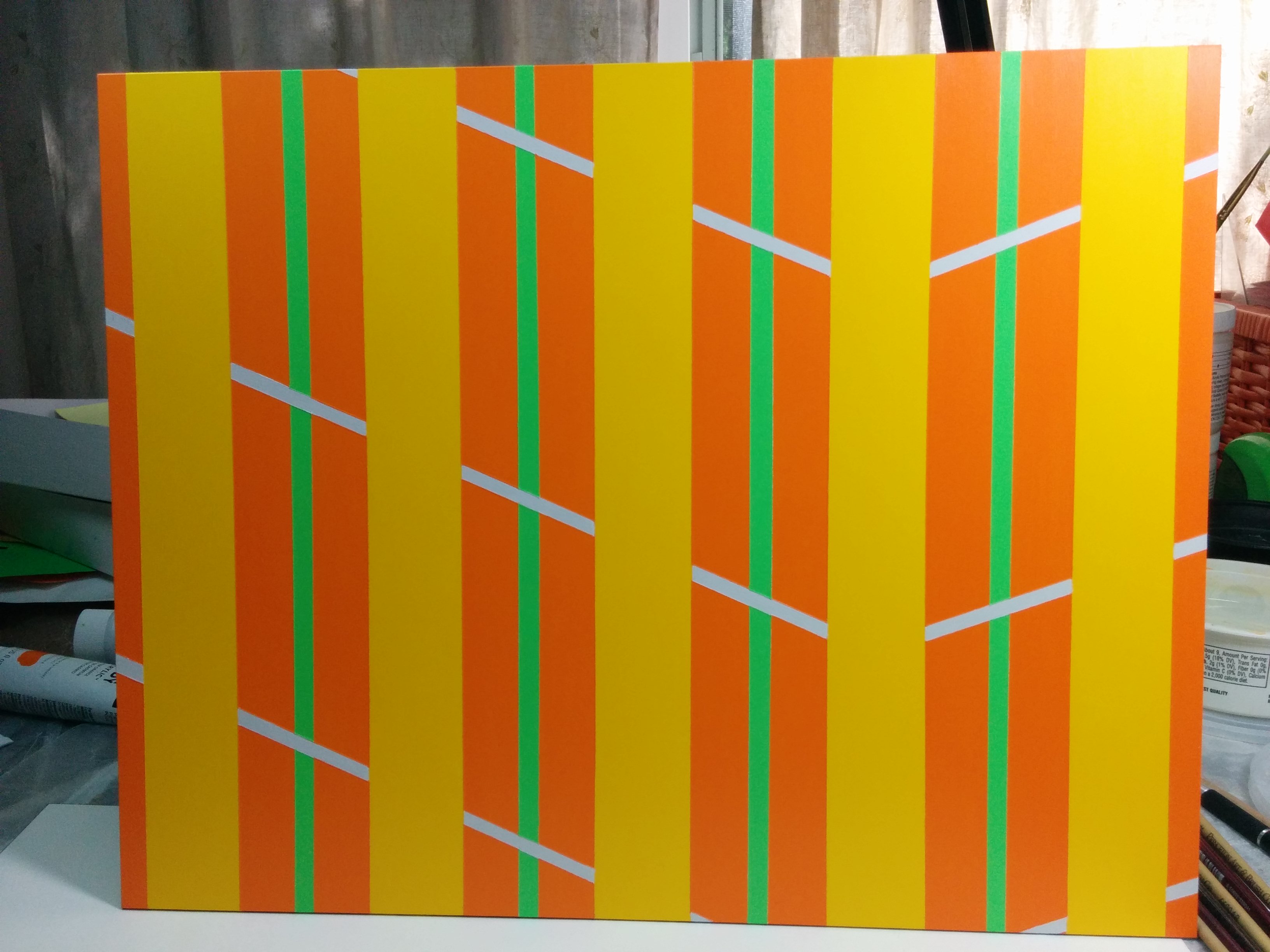
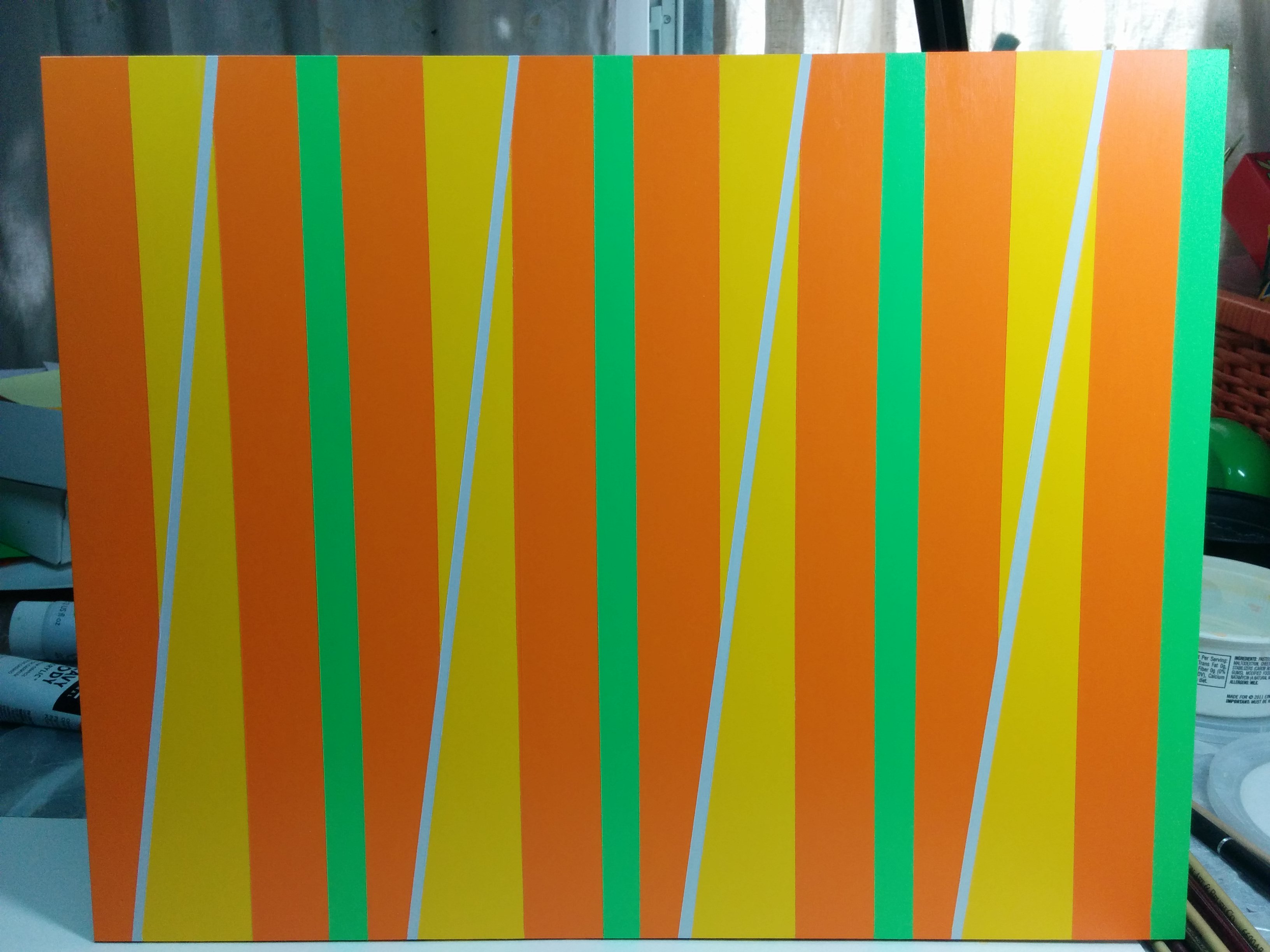
…to continue.
I like using grey. Grey is adaptive, full of possibility, sometimes soft and quiet or moody, stormy, impervious. Misty and metallic. It can find its place among a throng of primary and secondary colors or be a solo act. Grey can be glistening, luminous, strong, supportive, and purposely mute. The Mona Lisa of color.
Grey had been a staple color in many of my early oil paintings such as this detail from Full Moon Shuffle done in 1982.
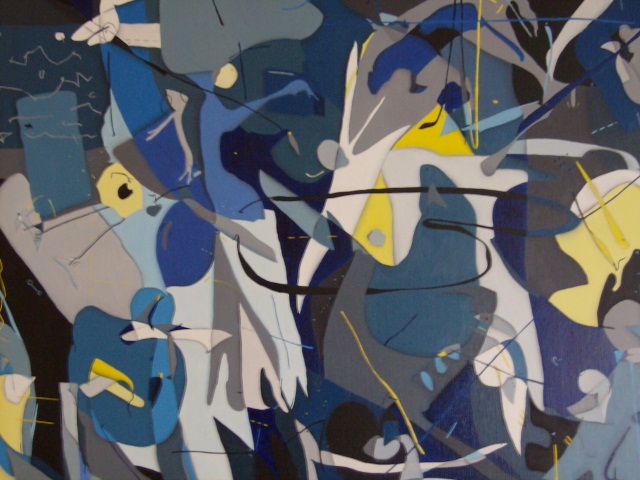
After having limited my palette to mostly black, white and grey; I began adding other colors, first blue, then yellow – not ready to tackle a full palette. As I look at it now, the greys and reduced palette give the painting’s movement and forms a sense of a developing stage. In the process of change. As if the greys are holding places for a future of color.
Now, grey is a breath into the painting.
 Ynotartblog's Blog
Leave a comment